USD
USD  Canadian Dollar (CAD $)

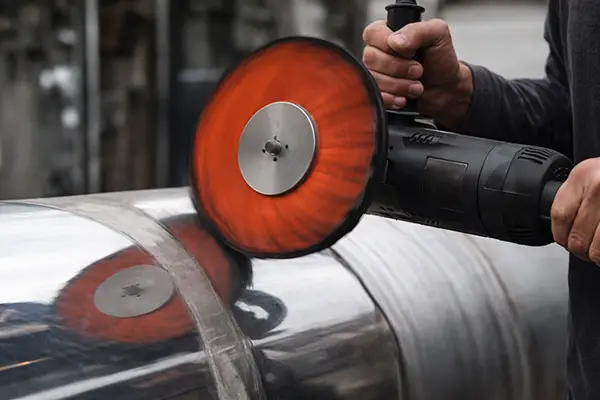
From busy metal fabrication shops to the precision-focused world of aerospace manufacturing, industrial abrasives play a critical role behind the scenes. They cut, grind, polish, smooth, and prepare surfaces with a level of consistency and control that few other tools can match.
For many businesses, abrasives are more than consumables. They are essential to productivity, safety, and overall product quality. Yet with so many types available and each designed for specific applications, choosing the right abrasive can feel complex.
This guide provides a clear overview of industrial abrasives, including their types, common uses, and key benefits. Whether you work in metal, wood, automotive, or construction, understanding abrasives will help you make better, more efficient product choices.
What Are Industrial Abrasives?
At a basic level, abrasives are materials used to wear down, shape, or polish surfaces through friction. This ranges from everyday sandpaper to advanced diamond-coated grinding tools used in highly specialized industries.
Abrasives are typically made from durable minerals such as aluminum oxide, silicon carbide, zirconia alumina, or engineered superabrasives like cubic boron nitride (CBN). These materials are built to handle high pressure, heat, and demanding industrial conditions while maintaining consistent performance.
They come in many forms including sheets, discs, belts, wheels, powders, and compounds, each designed for specific applications and finishes.
Types of Industrial Abrasives
1. Coated Abrasives
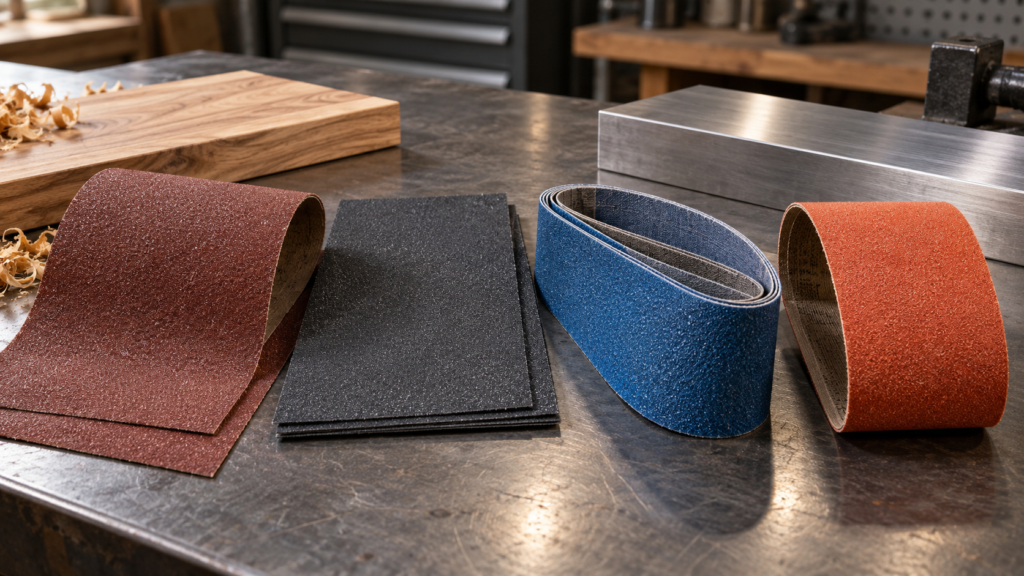
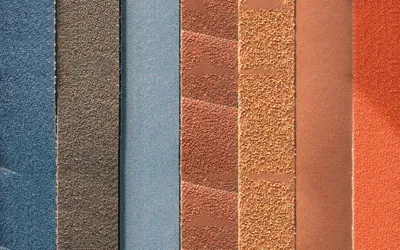
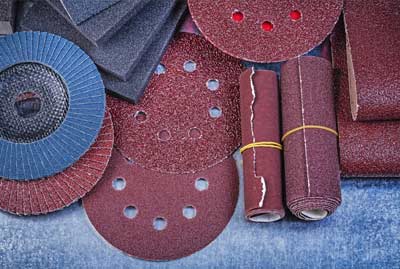
Coated abrasives are created by bonding abrasive grains to flexible backings like paper, cloth, or fibre.
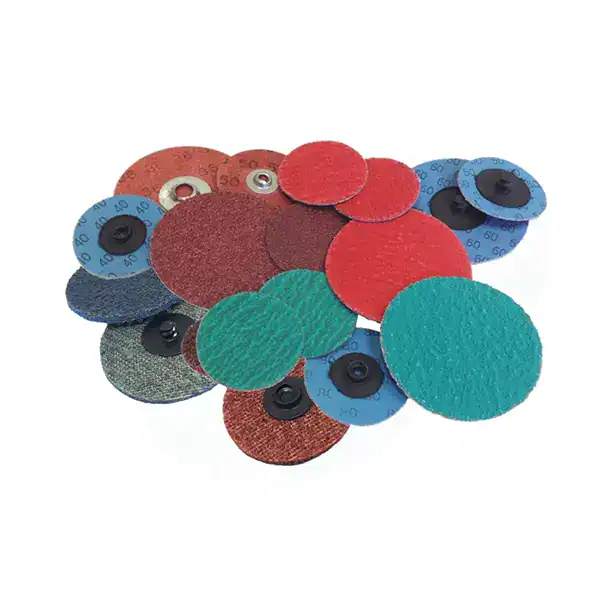
Examples: Sandpaper sheets, sanding belts, sanding discs, rolls
Uses: Surface preparation, shaping, weld blending, deburring
Benefits: Highly versatile, available in a wide grit range, suitable for both aggressive removal and fine finishing
2. Bonded Abrasives
Bonded abrasives combine abrasive grains with bonding agents such as resin or vitrified materials to form solid shapes.
Examples: Grinding wheels, cutting discs, mounted points
Uses: Heavy material removal, cutting metal or stone, sharpening, precision grinding
Benefits: Strong, durable, and designed for high-speed, demanding applications
3. Superabrasives
Superabrasives represent the highest-performance category, made from synthetic materials like diamond or CBN.
Examples: Diamond wheels, CBN grinding wheels
Uses: Machining hardened steels, carbide, ceramics, and aerospace materials
Benefits: Exceptional durability, precision, and long tool life for high-value applications
4. Loose Abrasives (Compounds & Powders)
Loose abrasives are used in powder, paste, or slurry form alongside buffing or lapping tools.
Examples: Polishing compounds, diamond paste, lapping powders, blasting media
Uses: Fine polishing, surface refinement, and ultra-smooth finishing
Benefits: Ideal for achieving finishes that require a high level of detail and control
5. Non-Woven Abrasives
Non-woven abrasives consist of abrasive grains embedded within a synthetic fibre structure.
Examples: Surface conditioning discs, hand pads, belts, rolls
Uses: Cleaning, rust removal, blending, and light deburring
Benefits: Gentle on materials while still effective, providing consistent surface finishes without excessive removal
Key Industrial Applications
Abrasives are used across nearly every industry in Canada. Some of the most common applications include:
-
Metal Fabrication: Grinding welds, cutting steel, deburring, surface prep for coatings
-
Woodworking: Sanding, finishing, and preparing wood surfaces
-
Automotive: Paint removal, refinishing, polishing, and rust removal
-
Aerospace: Precision grinding of high-performance alloys and components
-
Marine: Corrosion removal and preparation for protective coatings
-
Flooring & Construction: Sanding hardwood floors, polishing concrete, finishing stone
-
Jewellery & Fine Work: Achieving detailed, high-gloss finishes
The Benefits of High-Quality Abrasives
Choosing the right abrasive, and choosing quality, makes a measurable difference:
Improved Efficiency
High-quality abrasives cut faster and last longer, reducing downtime.
Cost Savings
Durable products require fewer replacements, lowering overall costs.
Consistent Results
Reliable abrasives deliver uniform finishes, especially important for precision work.
Safety and Reliability
Well-manufactured abrasives reduce the risk of breakage or failure.
Versatility
The right abrasive can handle multiple stages of material processing, from cutting to finishing.
Why Canadian Businesses Value Local Supply
Canadian manufacturers and contractors operate in conditions that demand reliability. Working with a Canadian supplier provides:
-
Faster shipping and reduced downtime
-
Access to knowledgeable support
-
Confidence in product quality and standards
At Sandpaper.ca, we offer a complete range of abrasive solutions, from sanding products to grinding and polishing tools, all supported by responsive service and dependable supply.
Frequently Asked Questions (FAQs)
What are the main types of industrial abrasives?
The five primary types are coated, bonded, superabrasives, loose abrasives, and non-woven abrasives, each suited to specific tasks.
What are abrasives used for?
They are used to cut, grind, smooth, polish, and prepare surfaces across industries like metalworking, woodworking, automotive, and construction.
What’s the difference between coated and bonded abrasives?
Coated abrasives use flexible backings and are ideal for finishing, while bonded abrasives are rigid and built for heavy-duty cutting and grinding.
What are superabrasives?
High-performance abrasives made from diamond or CBN, used for extremely hard materials and precision applications.
Why choose high-quality abrasives?
They improve efficiency, reduce long-term costs, provide better finishes, and enhance safety.
Do abrasives expire?
Yes. Some bonded abrasives have a shelf life and should not be used past their expiry date.
How do I choose the right abrasive?
It depends on the material, application, and desired finish. Selecting the right type and grit is key to performance.
Which industries rely most on abrasives?
Abrasives are essential in metal fabrication, woodworking, automotive, aerospace, marine, construction, and fine finishing industries.
Conclusion: The Right Abrasive Drives Better Results
Abrasives may seem like small components, but they have a significant impact on performance, quality, and safety. Selecting the right abrasive ensures better results, improved efficiency, and more reliable operations.
For Canadian businesses focused on quality and consistency, investing in the right abrasive solutions is a smart and necessary choice.
Take Your Finishing to the Next Level
Explore a full range of industrial abrasives trusted by professionals across Canada. From sanding and grinding to polishing and finishing, Sandpaper.ca
Shop online or connect with our team to find the right products for your needs.
Sandpaper.ca – Built for Performance. Trusted Across North America